
Build Soccer Excellence Now-Youth Leadership
- irvingarmstrong
- Mar 18
- 5 min read
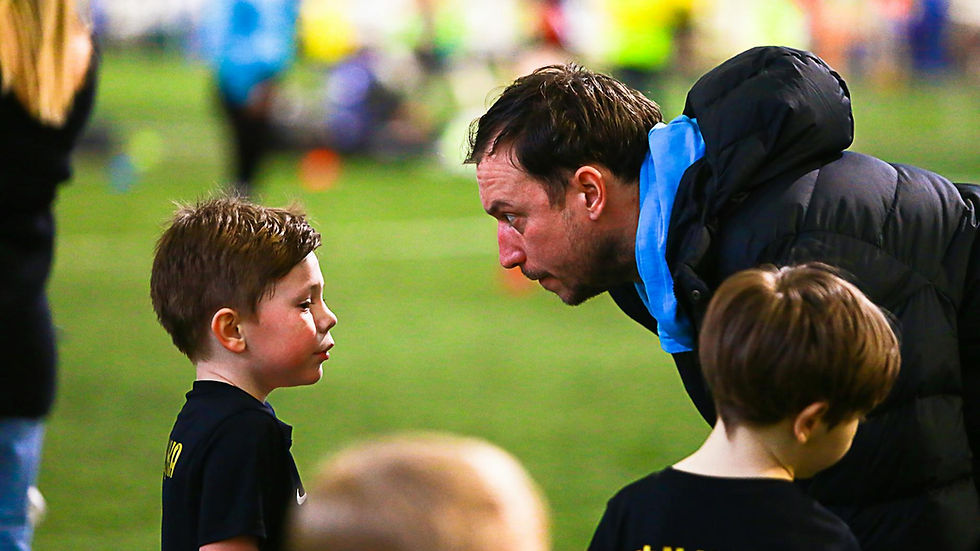
The journey to developing elite soccer players extends far beyond technical drills and physical conditioning. While mastering the ball and achieving peak fitness are non-negotiable foundations, true sustained success-the kind that defines top-tier clubs and national teams-hinges upon cultivating robust Developing Youth Soccer Leadership. In today’s fast-paced, high-pressure environment, teams that thrive are those where players take ownership, communicate effectively, and lead both by example and by voice. For parents, coaches, and administrators seeking to move beyond participation trophies toward genuine competitive advantage, understanding how to instill these leadership qualities immediately is paramount. This requires a strategic, focused approach, which is central to Building Soccer Excellence now.
The Leadership Void in Modern Youth Soccer
Many traditional youth development models focus almost exclusively on individual skill acquisition. While this produces technically proficient players, it often leaves a critical gap when the pressure mounts in high-stakes matches. A technically gifted team without internal leadership can fracture under duress, failing to adapt or hold each other accountable. This is a pervasive pain point for parents and coaches navigating complex training pathways; they see potential but lack the framework to unlock that strategic maturity.
Effective leadership in soccer isn't limited to the captain's armband. It involves cognitive leadership, vocal leadership, and emotional leadership displayed by every player on the pitch. We need players who can manage transitional moments, organize defensive shape mid-play, and offer constructive critique during downtime.
Moving Beyond the Sideline Command Structure
The era where players solely wait for instructions from the coach on the touchline is obsolete. Modern soccer demands distributed leadership. This means empowering players to make split-second decisions based on game intelligence. When players understand the tactical framework deeply enough to lead their peers through complex sequences, performance ceilings rise dramatically. This cognitive preparation is crucial for Building Soccer Excellence now.
Delegated Responsibility: Assign specific non-captain roles during training sessions, such as "Defensive Quarterback" or "Midfield Tempo Setter."
Decision-Making Under Pressure: Structure drills that force immediate, high-stakes communication among small groups without coach intervention.
Post-Game Self-Assessment: Require small player groups to analyze a specific phase of play before the coach offers input, encouraging peer leadership and analysis.
Instilling Accountability: The Core of Youth Soccer Leadership
Leadership development is inseparable from accountability. If a young player is tasked with organizing the back four during a set piece but fails to communicate, the consequence must be a learning moment focused on the impact of that failure on the team, not just on the individual player’s mistake. Developing Youth Soccer Leadership requires creating a culture where players police standards constructively.
This aligns directly with enhancing overall game awareness. A player who takes responsibility for organization must first possess superior game intelligence. If you are finding your athletes struggling to process information quickly enough to lead effectively, exploring advanced cognitive training is essential. Consider reviewing our insights on tactical awareness in our post, Youth Soccer IQ: Develop Game Intelligence.
The Role of Coaches in Fostering Command Presence
Coaches must transition from being sole instructors to being facilitators of player-led environments. This means intentionally stepping back and allowing situations to unfold imperfectly so that players have the opportunity to step up and correct them. For instance, when addressing tactical lapses, shift the focus from "What did I tell you to do?" to "What did the team decide needed adjustment in that moment?"
This approach directly confronts the pain point of coaches not equipping players with the right tools to dominate. True dominance comes from internal regulation and self-correction, driven by peer leadership.
Specialized Roles and Leadership Opportunities
Excellence is often found in specialization, and this applies to leadership roles as well. Consider the goalkeeper. In contemporary soccer, the modern goalkeeper is often the primary organizer of the defensive line and the initial distributor of attack. Their leadership demands a unique blend of confidence and technical clarity, particularly in distribution skills. Neglecting specialized coaching in this area leaves a significant vulnerability.
Vocal Authority: Goalkeepers must be coached not just on saving shots, but on commanding the penalty area audibly and consistently.
Distribution Leadership: Training must emphasize decision-making under pressure regarding when to play short, switch the field, or launch the counter-attack effectively.
Emotional Anchor: The keeper’s demeanor sets the tone for the defensive unit’s resilience.
Ensuring your young keepers receive specific, strategic guidance in these areas is critical for holistic team improvement. Developing these specialized leadership traits unlocks potential that generic positional training often misses. To further explore enhancing on-field cognition necessary for this leadership, check out these Boost Youth Soccer Game Intelligence: Expert Tips.
Measuring the Impact of Leadership Development
How do we know if Developing Youth Soccer Leadership is succeeding? The metrics are not always visible on the score sheet immediately. Look instead for: increased player-to-player coaching on the field, reduced reliance on the bench for tactical corrections during live play, and improved team response time to unexpected game scenarios. These indicators suggest that the internal leadership structure is functioning autonomously. This strategic maturity is the hallmark of programs committed to Building Soccer Excellence now.
Frequently Asked Questions
What is the difference between a team captain and true team leadership?
The captain is an appointed title, often rotational, representing the team officially. True team leadership is an emergent quality where multiple players exhibit initiative, accountability, and positive influence, regardless of their official designation.
When should leadership training start in youth soccer development?
Leadership training should begin immediately, integrated into every training session from the earliest stages. While complex strategic leadership emerges later, foundational concepts like eye contact, positive reinforcement, and task ownership must be ingrained from day one.
How can parents support leadership development at home?
Parents can support this by fostering intrinsic motivation and resilience, encouraging their child to reflect on team performance rather than just individual statistics, and praising acts of selfless communication or support on the pitch.
What happens if a designated leader fails to step up during a crucial match?
This presents a prime coaching opportunity. Instead of criticizing the failure, analyze the moment: What environmental factors prevented the player from asserting leadership, and what systemic support could the team have provided?
The commitment to Building Soccer Excellence now is intrinsically linked to our dedication to Developing Youth Soccer Leadership. It requires moving beyond simply teaching techniques to actively constructing environments where young athletes are required, expected, and supported to lead. By integrating accountability, fostering cognitive development, and empowering specialized roles, we prepare players not just for the next match, but for sustained excellence in the demanding landscape of elite soccer competition. Commit today to nurturing the leaders within your squad; the payoff is a resilient, self-managing, and dominant team.

$50
Product Title
Product Details goes here with the simple product description and more information can be seen by clicking the see more button. Product Details goes here with the simple product description and more information can be seen by clicking the see more button

$50
Product Title
Product Details goes here with the simple product description and more information can be seen by clicking the see more button. Product Details goes here with the simple product description and more information can be seen by clicking the see more button.
$50
Product Title
Product Details goes here with the simple product description and more information can be seen by clicking the see more button. Product Details goes here with the simple product description and more information can be seen by clicking the see more button.


Comments